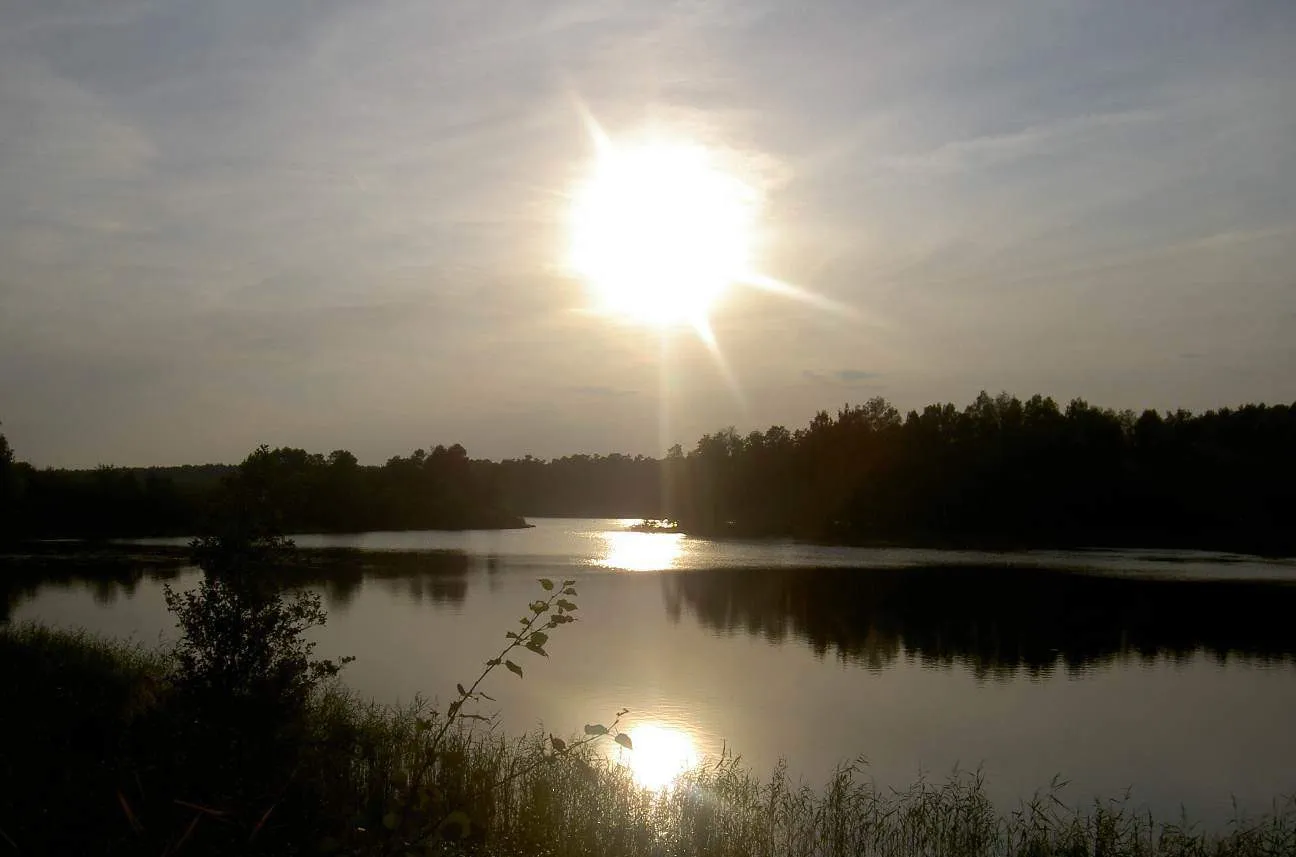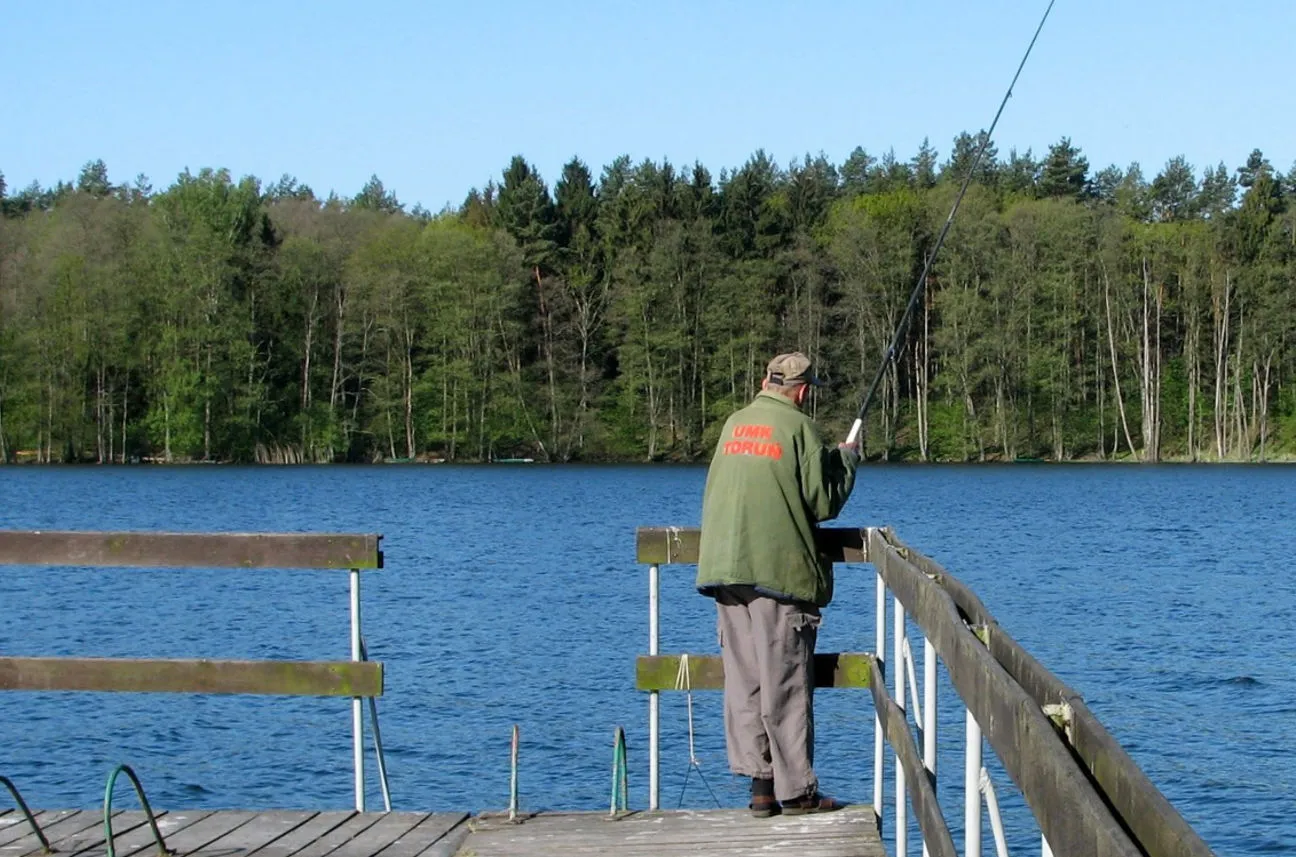
It is easy to arrive here for the beach and the boats, then stop there. After a little time by the shore, many visitors notice that an equally important part of the reservoir lies slightly off to the side: in the reeds, the quieter coves and the wooded banks. You do not need specialist knowledge to see it.
A landscape marked by birdlife
Birdlife is often the first clear sign. Slow down for a moment and it becomes easier to notice grey herons, cormorants, mute swans, grebes, moorhens and wild ducks. Depending on the season, visitors may also spot white-tailed eagles, cranes or other less common species connected with the Brda valley and the edge of the Tuchola Forest.
That is why binoculars are genuinely useful here. The reservoir does not reveal everything at once. It rewards patience, careful listening and a longer look at reed beds, quieter coves and sections where the trees shield the shoreline from the busiest part of summer traffic.
Forest reaching the waterline
The forest plays an equally important role. Pine is the dominant note, but the landscape is not monotonous. Birch, oak, wetter shoreline vegetation and more sheltered inlets keep changing the character of different sections. That is why the reservoir feels less like an empty water basin and more like a long wooded corridor with water running through it.
That setting also increases the chance of seeing other animals. Local descriptions regularly mention beavers, otters, muskrats, roe deer, red deer and wild boar. The point is not that every visit brings a wildlife sighting. It is that nature here is not a backdrop. It helps define the character of the place.
How to look without disturbing
The reservoir lies within a protected landscape area, and many sections still retain a semi-wild character. For visitors, the principle is simple: the quieter the better. That helps the birds, the shoreline and the overall experience of being here.
A few habits go a long way. Stay out of the reeds. Do not land on islands or places that look like nesting areas. Leave nothing behind. Avoid turning every quiet bay into a noisy picnic spot. Anyone who moves through the area with that kind of care will notice much more than the shoreline alone.